5th string capo
Added on
View photographs ↓Different ideas for a fifth-string capo
1:
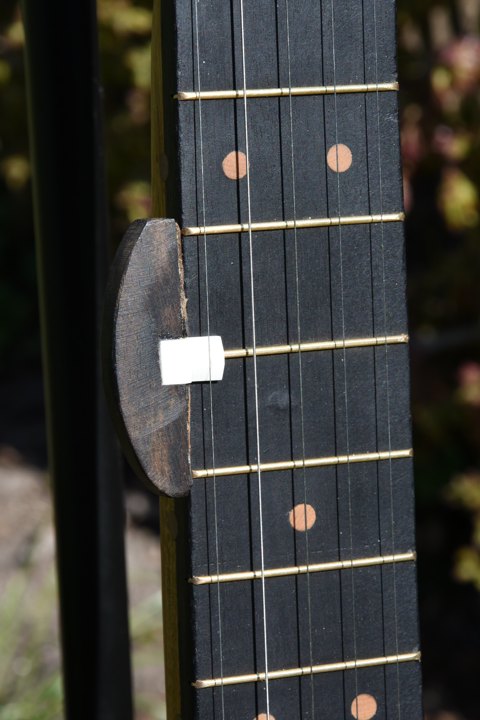
Using a capo on the fifth string can be a challenge. You can fit spikes or a sliding capo rail. On my banjos, the ebony fretboard is often quite substantial, thicker than on factory-made banjos. I do not like drilling screw holes into ebony. What if it splits or cracks? Ebony is very hard wood. That is why I work on other capo solutions. I want a capo that is easy to use and stable. The photograph shows my model II capo, fitted specifically to the banjo it is to be used on. It is easy to put on and stays firmly in place. It can also sit between the frets, which may avoid the usual fine-tuning needed when using a capo.
The only challenge is probably taking care not to lose it, since it is a separate part. I therefore made the ebony piece a little larger so it is easier to handle, see and find. That is how it goes with removable capos!
5th string capo
Made from ebony, bone and leather.
Moves easily up and down from fret to fret.
Can also sit between frets.
This is probably the solution I use most.
(Bottom photograph on the right)
2:
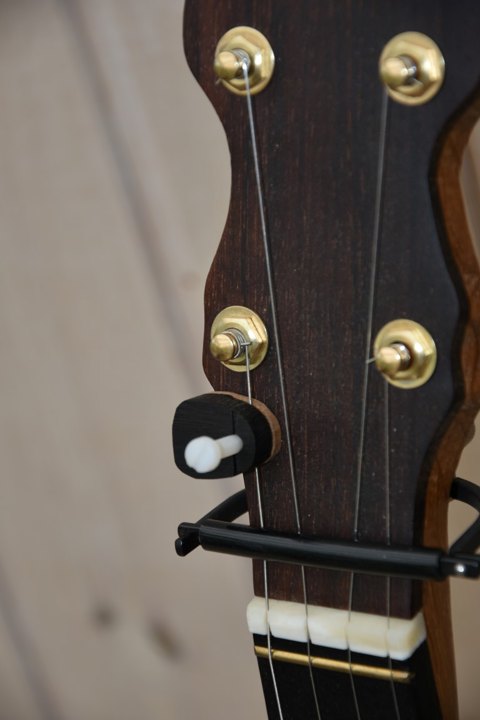
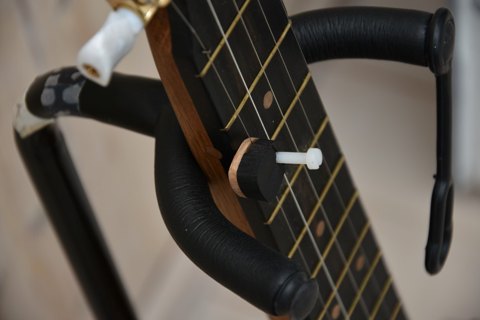
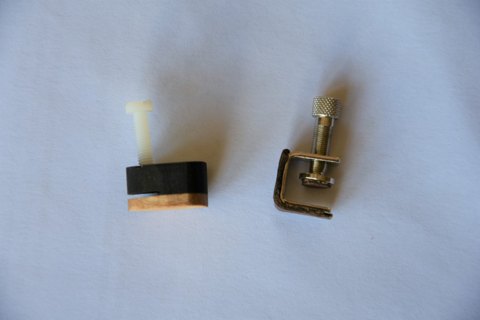
A mini capo is made from ebony. To protect the string, it is fitted with an M4 plastic machine screw. This capo is easy to use and move. Another advantage is that it can be attached beside the banjo's tuning pegs when not in use, so it does not get lost. (Photographs 1 and 4)
3:
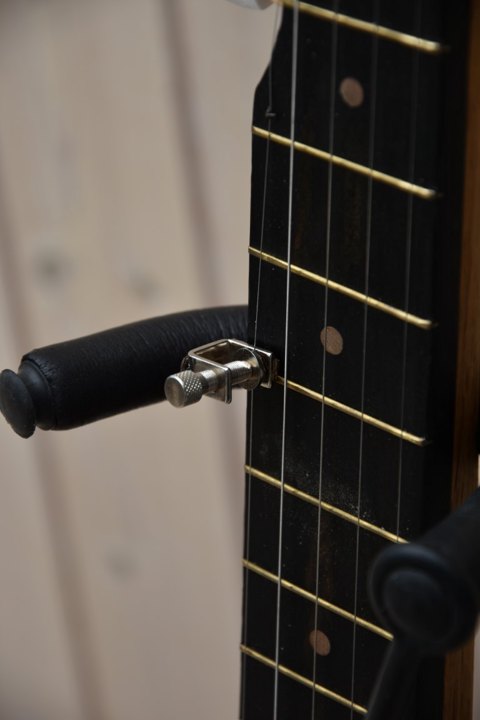
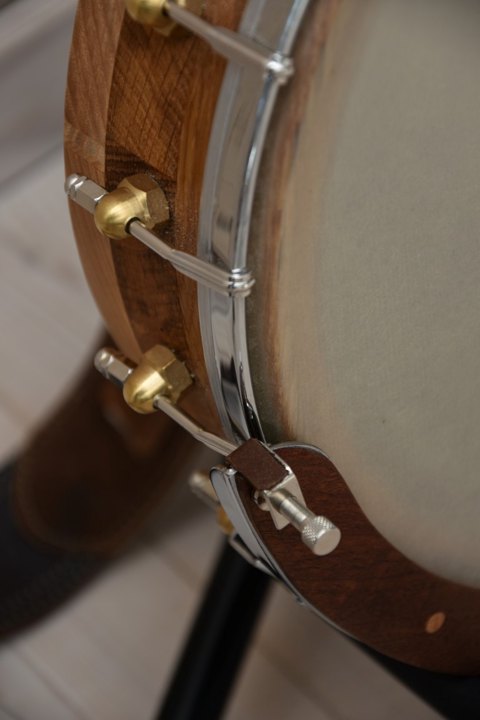
Use an air-hose clamp from an aquarium air pump. It is cheap and made of metal. I glued leather onto it with superglue. It can be attached to the banjo's armrest, so you know where it is! (Photographs 2 and 3)
Content last updated on 13 May 2019